ROCK — Cultural-led Urban Regeneration
Research and fieldwork embedded in the Horizon 2020 ROCK project — studying access to culture and social sustainability of urban regeneration in Lisbon's post-industrial parishes of Marvila and Beato.
Client
H2020 ROCK / University of Lisbon
Type
Research · Urban Development
Role
Research · Fieldwork · Policy
Year
2019 – 2020
Background
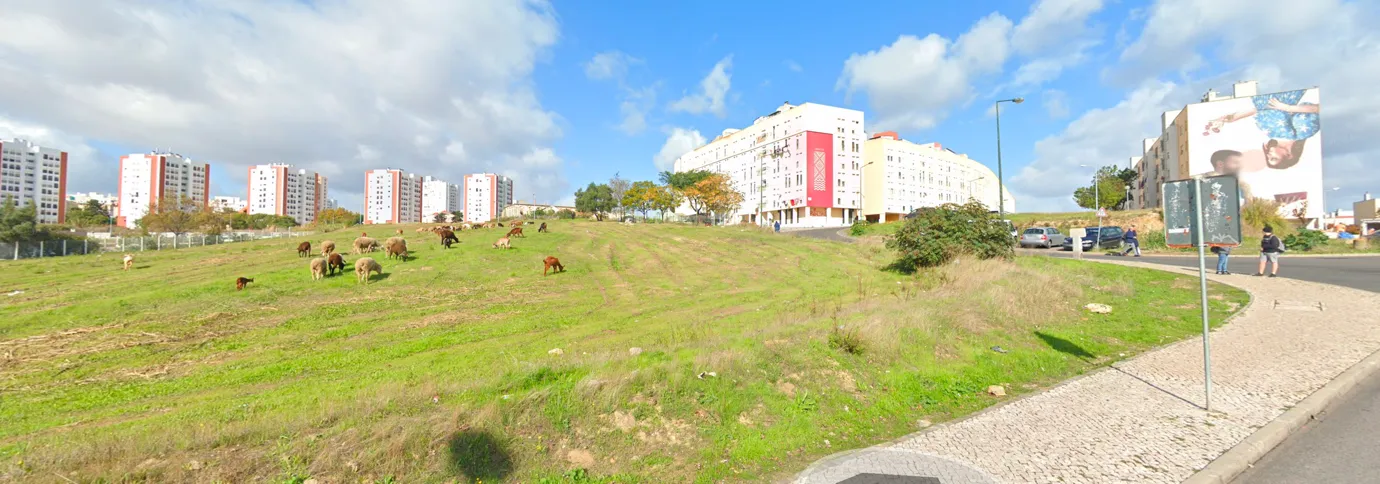
This research was carried out within the action-research framework of the ROCK project (Regeneration and Optimisation of Cultural Heritage in Creative and Knowledge Cities), co-funded by Horizon 2020 of the European Union. The project worked across ten European cities to explore how cultural heritage can drive sustainable urban regeneration.
The Lisbon component was led by the Institute of Social Sciences of the University of Lisbon (ICS-UL) in partnership with the Câmara Municipal de Lisboa, with Marvila and Beato selected as the intervention area due to their rich industrial heritage and acute need for regeneration.
My master's thesis, completed at the University of Kiel during a period of study at the University of Lisbon, was embedded in this project — contributing scientific output while benefiting from project data, methodology, and fieldwork access.
Research Question
Can culture-led regeneration be genuinely socially sustainable?
The research asked whether culture-led urban regeneration could be genuinely socially sustainable — not just economically transformative — and what barriers prevent local residents from benefiting equally from the process.
The methodology combined quantitative survey data from the ROCK resident survey (368 respondents) with qualitative fieldwork: focus group discussions with 20 cultural agents, semi-structured interviews, and participatory field observation over 18 months.
Living in Lisbon for most of this period, I was able to observe the area's rapid transformation firsthand — from attending residents' assemblies and community group meetings to walking every part of the territory and mapping infrastructure barriers on foot.
Framework
The ROCK Circle
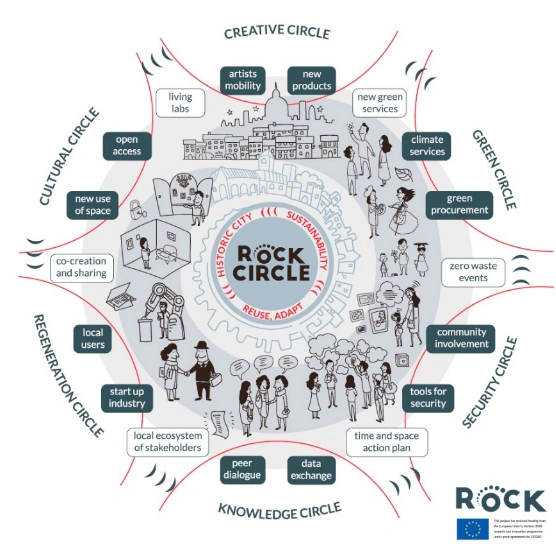
The project structured its approach around six interconnected pillars — creativity, culture, knowledge, security, sustainability, and regeneration. My research contributed to the 'open access' component of the cultural circle, focusing specifically on how physical, social, and intellectual barriers prevent local communities from accessing the cultural activities emerging in their neighbourhood.
Key Findings
Three categories of barriers
The research identified three categories of barriers preventing cultural participation in the area, supported by resident survey data and extensive qualitative evidence from focus group discussions with cultural agents based in the territory.
Physical barriers: Insufficient public transport (64% of residents use buses to leave the area; train stops only every 30–60 min with no weekend service at Marvila station). Train lines physically divide the territory into disconnected sections. Cultural facilities in repurposed heritage buildings often lack accessible design.
Social barriers: Low educational attainment correlated with low cultural participation. Only 5% of surveyed residents felt addressed by the local cultural offer; 45% believed it was aimed at outsiders and tourists — a sense of symbolic exclusion captured in focus groups: "The area seems like an island… it is huge but cut off with train lines and expressways."
Communication barriers: Hermetic artistic language in event descriptions excluded non-specialist audiences. Information was poorly distributed to reach residents. Digital barriers — limited internet access and skills — compounded the problem in a low-income area.
Gentrification risk: Cultural agents themselves acknowledged their role in triggering displacement. Rising rents along the riverside were already affecting long-term residents. Large-scale projects like Hub Criativo do Beato raised concerns about who would ultimately benefit from regeneration.
Map
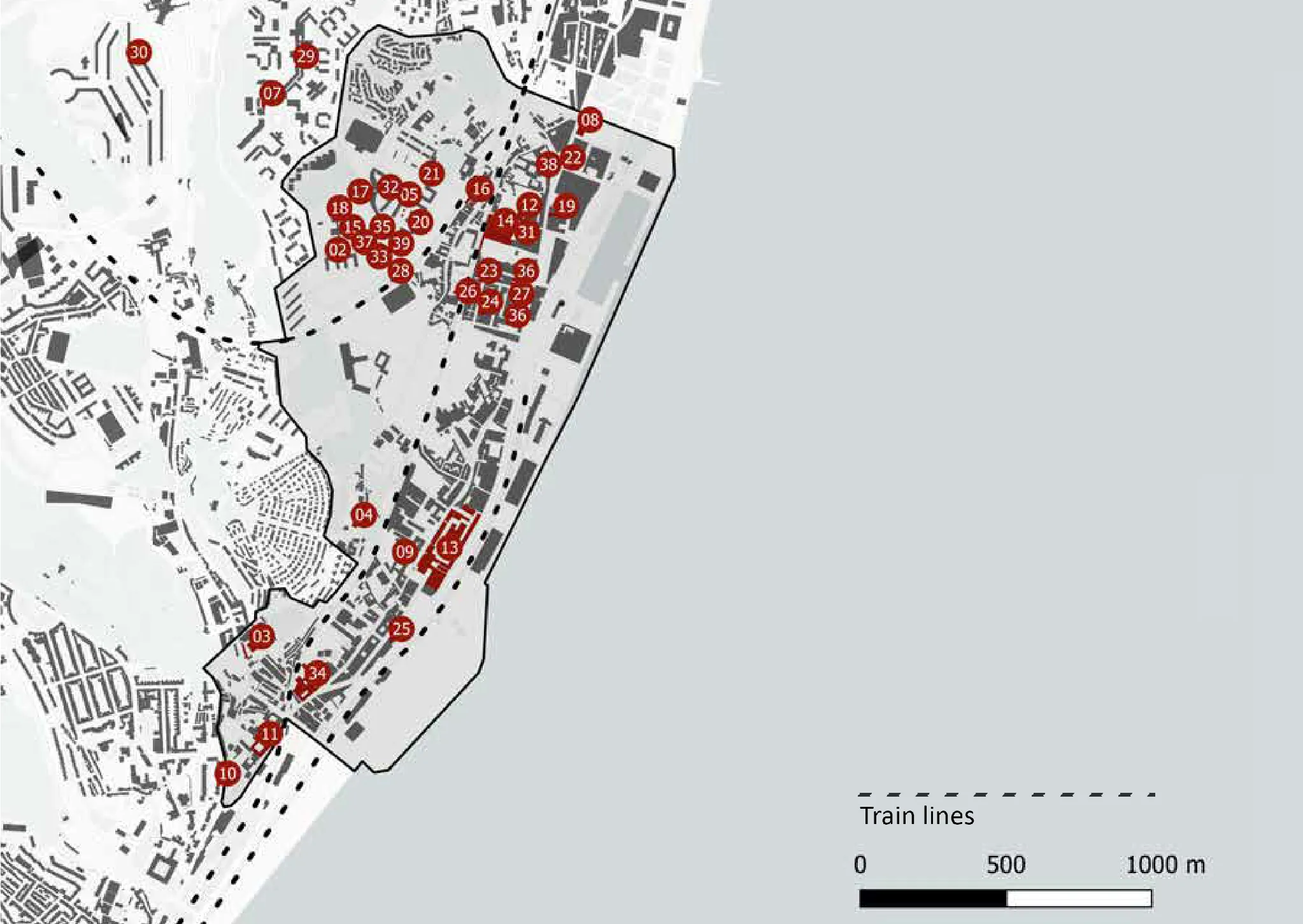
The accumulation of cultural and creative industries in Marvila and Beato grew explosively between 2014 and 2019 — driven primarily by affordable rents in vacant industrial buildings rather than top-down planning. The map above shows the density of galleries, creative spaces, and gastronomy along the riverside by the time fieldwork was completed. Source: ROCK project data.
Heritage
Industrial heritage as cultural infrastructure
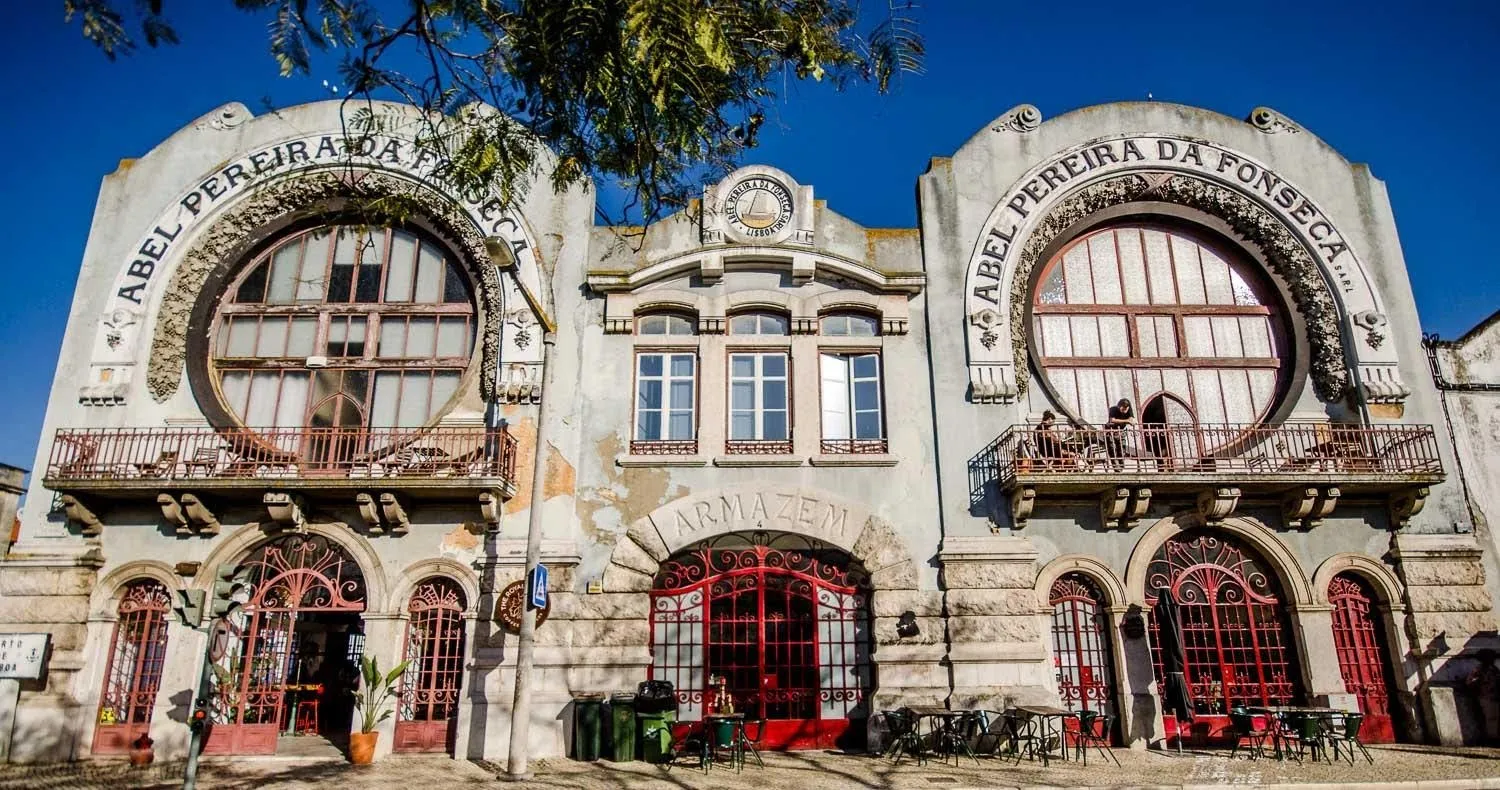
The Abel Pereira da Fonseca warehouse on the Marvila riverside is one of many 18th–19th century industrial buildings being repurposed as galleries and cultural venues. While these spaces give the area its distinctive character, their ornate multi-level layouts create significant accessibility barriers — a tension at the heart of the research.
What this means
Communication as the missing link
This research shaped how I think about public-facing communication for European projects. The core challenge in Marvila wasn't the absence of culture — the area had galleries, theatres, fado schools, a new library — it was the inability to communicate it clearly and accessibly to the people who lived there.
That insight translates directly to how Horizon-funded projects communicate their work. A complex multi-partner research project might produce extraordinary results for cities, but if those results aren't communicated in language that city partners, stakeholders, and residents actually understand, the dissemination work fails.
Working inside the ROCK project — attending consortium meetings, contributing to participatory workshops, seeing how 33 institutions across 13 countries coordinated their outputs — gave me an understanding of EU project communication that's difficult to acquire any other way. It's why I now work specifically with European research and civic innovation projects on their digital presence and dissemination.
Research methods
Action research · Mixed methods · Resident survey analysis (n=368) · Focus group facilitation · Semi-structured interviews · Participatory field observation · GIS mapping · Urban morphology · Qualitative coding (ATLAS.ti) · Policy recommendations · Horizon 2020 dissemination · Cultural governance
Let's work together.
Building a digital presence that needs to stay clear, accessible, and up to date? I design and build digital experiences that connect content, context, and place — from websites to map-based interfaces — and support communication over time.
→ tim@poggemann.de